
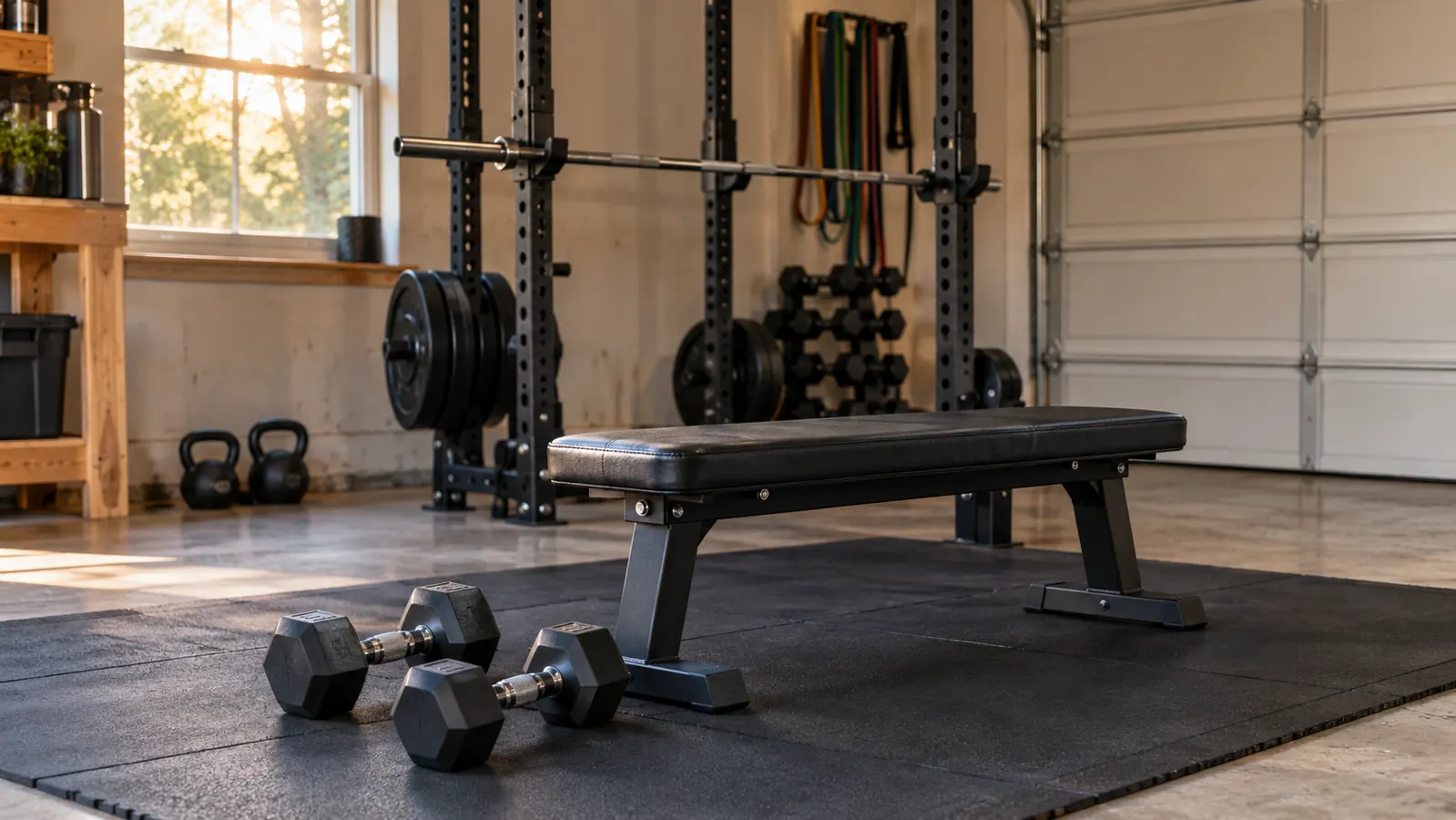
Fixed dumbbells are the better tool, and I will say that plainly before anything else. A solid hex dumbbell does one job and asks nothing of you. You pick it up, you work, you set it down. Nothing needs adjusting, nothing has a locking mechanism to trust. But a set worth owning, pairs from 5 to 50 lbs, needs a rack and a wall. In my garage the left bay is 11 by 20 feet and the truck parks in the right one, so every foot has a job. That is the whole reason I bought the Lifepro Adjustable Dumbbells in November 2024 instead of hunting down used iron one pair at a time.
A year later I still think that was the right call for this room. It is not the right call for every room, and I am not going to pretend a 25 lb adjustable pair beats a rack of hex dumbbells for somebody who has the space and the budget. What it beats is the version of me that would have bought two pairs, gotten tired of shuffling them around, and gone back to the barbell for everything. Here is what a year of 5:30 AM sessions actually showed me.
How I Ended Up Comparing These Two
I lift four mornings a week, 5:30 to 6:20, before I leave for service calls. The setup is a used Olympic bar with about 230 lbs of plates, a power rack, a bench, and the Lifepro pair on the floor beside it. No machines, no cable stack, no second set of anything. The barbell handles squats, pressing and deadlifts. The dumbbells handle curls, lateral raises, one-arm rows, warm-ups and the accessory work at the end.
The reason I keep coming back to this comparison is that people ask me about it. A coworker with a spare bedroom wanted to know whether to buy adjustable or start collecting fixed pairs. The answer depends on one number: how much floor and wall you can give up. Fixed dumbbells are easier to live with. Adjustable dumbbells are easier to live around. Those are different things, and only one of them fits a bay that also holds a truck.
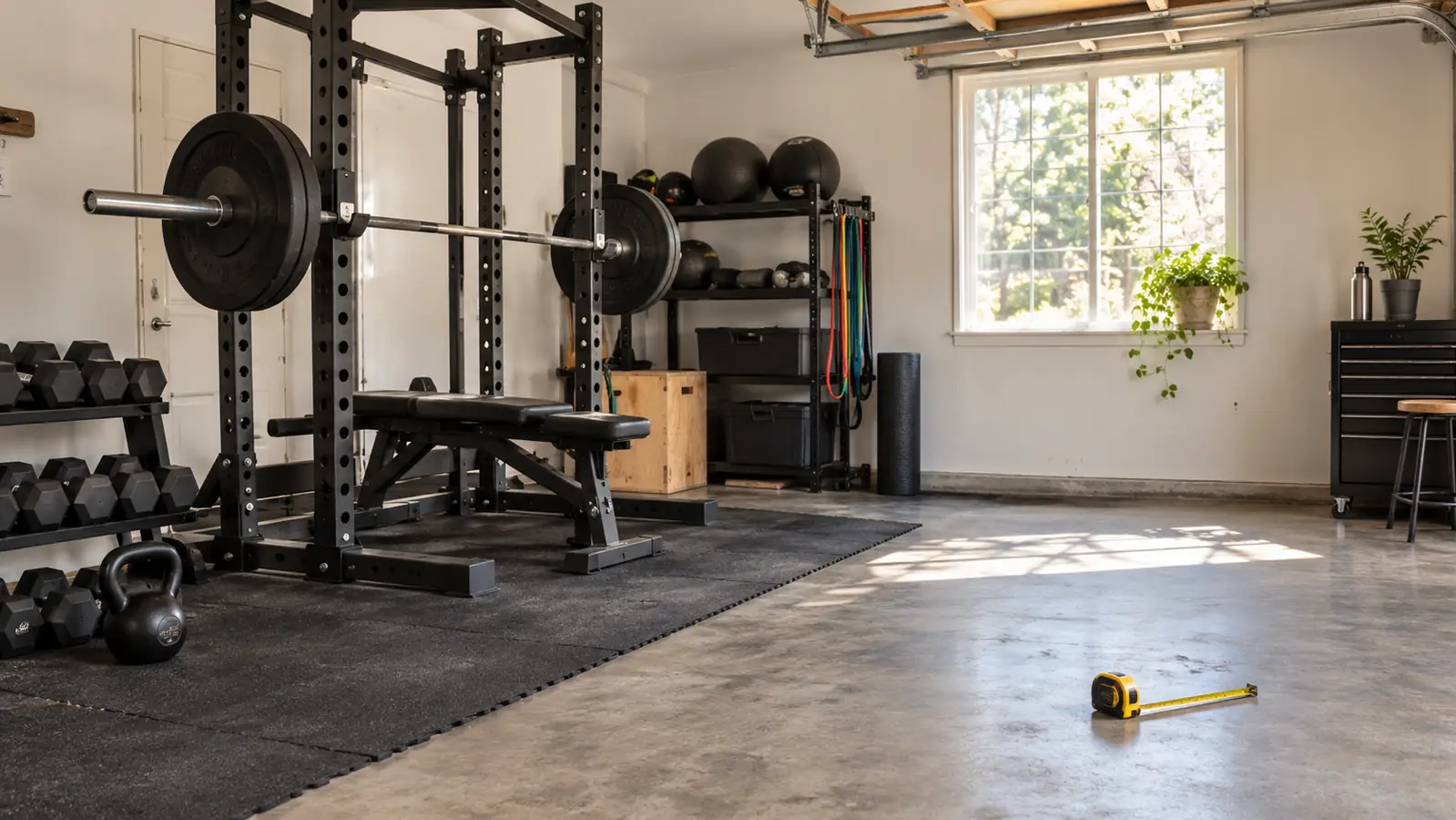
I did the measuring on a Saturday morning in October 2024, before I bought anything. I ran a tape from the front of the bench to the truck door and got 34 inches of clear walkway. A compact vertical rack six pairs deep would have eaten 18 of that, and I know myself well enough to know the dumbbells would have ended up on the floor in front of the rack anyway, which is worse than no rack at all. So the real choice was never adjustable versus fixed in the abstract. It was one adjustable pair versus a pile of iron on the concrete with nothing holding it, and I have lived in that version of a garage gym before. What I wanted this time was a pair I could pick up, work with, and set down without moving anything else out of the way first.

The Two Sides, Side by Side
| Lifepro Adjustable (5 to 25 lbs per hand) | Fixed Dumbbells | |
|---|---|---|
| Floor space | Two dumbbells on the concrete, about 13.6 by 6.7 inches each, parked beside the bench | A rack or a floor row, one pair for every weight you own |
| Weight range | 5 to 25 lbs per hand, nothing heavier | As heavy as you are willing to buy and willing to store |
| Changing weight | Turn the dial, 2.5 lb steps, a few seconds per hand | Nothing to change, pick it up and go |
| Feel in the hand | Textured non-slip grip and a compact body | Short and balanced, hangs the way a dumbbell should |
| Durability | Alloy steel body with a locking mechanism to look after | One piece of steel, nothing to adjust, nothing to fail |
| Drop tolerance | Set it down under control | Takes a drop on rubber matting |
| Warm-up jumps | 2.5 lb steps let the first two sets stay honestly easy | Jumps are whatever pairs you own, usually 5 lbs |
| Buying pattern | One purchase covers every weight it offers | The set grows one pair at a time, as the budget allows |
| Noise | Quiet to lift, some handling noise when you change weight | Silent to lift, loud if it lands on concrete |
| Best for | A one-car bay or spare room with almost no floor to spare | A garage with a wall to give and a rack already in it |
Where Lifepro Wins
Floor space is the whole argument, so start there. The Lifepro pair takes a strip of concrete beside the bench, roughly 13.6 by 6.7 inches per dumbbell. A working set of fixed dumbbells runs from 5 to 50 lbs in 5 lb jumps, which is ten pairs, and even on a compact vertical rack that is a piece of furniture the size of a bookcase. In a one-car bay that already holds a rack and a bench, a bookcase is not going in. I measured before I bought them, and the honest answer was that fixed pairs would have crowded the walkway to the truck door.
Numbers, since I went and measured them. The pair sits in a footprint about 27 inches long and 14 inches wide when the two are side by side on the floor, which is roughly the width of the bench itself. A ten pair set on a compact vertical rack runs about 20 inches deep, 30 inches wide and 48 inches tall, and it wants a wall behind it, not just floor. My left bay has two walls. One is already spoken for by the power rack. The other is the one the truck door swings past. That second wall is the one a dumbbell rack would have wanted, and it is not available, which settled the question faster than any argument about convenience did.
The second thing the Lifepro pair does well is the small jump. Adjusting in 2.5 lb steps means a warm-up on lateral raises can go 5, 7.5, 10, 12.5 instead of 5 to 10 to 15. That matters more at 46 with a cranky left knee than it did at 20, because the first two sets are supposed to be easy and with fixed pairs they never quite are. And one purchase covered every weight in the range. I did not have to buy a second pair in month three when the first one got too light, which is exactly how the rack of iron starts growing.
The buying pattern point deserves its own line. With fixed pairs you buy once, then again in month four, then again when the first pair gets light. The set grows by accident and the floor fills up by accident, and nobody plans either one. One purchase ended that cycle for me, at least until the day 25 lbs per hand stops being enough.
Where Fixed Dumbbells Win
Now the other side, and it is the longer list. Fixed dumbbells have no moving parts. The Lifepro pair is alloy steel with a locking mechanism that holds the selected weight, and a locking mechanism is a thing that can wear, get gritty, or need a firm hand. Mine has been fine through a year of near daily use, but I check it. There is nothing to check on a hex dumbbell. It is a lump of steel with a handle, and it will outlive me, the rack, and probably the house.
They are also faster. Changing weight on the Lifepro takes a few seconds per hand, and in a superset or a drop set that pause interrupts the set in a way fixed pairs do not. The bigger issue is the ceiling. Twenty five pounds per hand is the top of the range, and 25 lbs does not cover heavy dumbbell pressing or heavy rows once you have been lifting a couple of years. Mine tops out my warm-ups and my accessory work, and everything heavy stays on the barbell. If dumbbells are your main lift, fixed pairs go as heavy as you are willing to buy.
Speed is the piece nobody mentions in the listings. On a drop set of curls, going down through the range means three dial changes per hand, six total, maybe twenty seconds of standing there with your arms cooling off. With fixed pairs it is three steps across the floor and you are lifting again. At 5:30 in the morning with 50 minutes on the clock before a service call, twenty seconds shows up. Same story on a superset where I move from a one-arm row straight into a lateral raise. I have gotten quicker on the dial over a year and I still plan the session around it, which tells you what I actually think of the pause.
The Lifepro pair does not replace a rack of iron. It replaces the eight pairs I would never have bought, stored, or found room for.
The 25 lb Ceiling, and Why It Matters Less Than You Think
The ceiling sounds like a deal breaker and for some people it is. If your plan for a home gym is dumbbell bench pressing, dumbbell rows as the main back movement, and heavy lunges, 25 lbs per hand will run out inside the first year. I would tell that person to buy fixed pairs, or loadable handles and plates, and skip this comparison entirely. No adjustable pair in this weight class solves that problem and the Lifepro is not pretending to.
For a garage gym built around a barbell, though, the ceiling rarely comes up. The bar handles the heavy work. The dumbbells handle what the bar is bad at: lateral raises, curls, rear delts, one-arm rows for the mid back, and warm-up sets that should not need a plate change. My son Cole, 15, uses them for the same things and never touches the top of the range. In a year I have wanted more weight maybe four times, and every one of those times the barbell was already racked and free.
What I Noticed After Twelve Months
Things I would want to know if I were reading this instead of writing it. The textured grip has held up. My hands are not gentle and the pattern is still there, still non slip with chalk, and has not polished smooth the way cheap handles do. The pair lives on the concrete beside the bench, gets knocked into by the vacuum and by a teenager's feet, and the body has no dents and no rattles.
The dial is the part I watch. It has stayed positive, meaning when it seats it seats, with no half click and no drift mid set. I set the weight, lift, and put it back. What I do not do is drop them. They get set down. On a pair with a locking assembly that is just sense, and it is the one habit the fixed dumbbells never demanded of me. If you are someone who finishes a set by letting the weight fall, buy iron and be done with it.
One thing I did not expect: the pair got more use once Cole started training with me in the spring. A 15 year old's working weights sit right in the middle of the range, so he runs the dial constantly, and the mechanism has taken that without complaint. That is a harder test than my own use, since I set a weight and leave it alone for three sets. He changes it between every single set, sometimes twice. If a locking assembly was going to loosen up or start skipping a notch, a teenager swapping weights four mornings a week was going to find it first. It has not happened. The grip has not smoothed off either, which surprised me more than the dial holding up.
What I Liked
- Takes a strip of floor instead of a wall of rack space
- 5 to 25 lbs in 2.5 lb steps covers warm-ups and accessory work
- Textured non-slip grip has held up to a year of near daily use
- One purchase covered every weight in the range
Where It Falls Short
- 25 lbs per hand is the ceiling, so heavy work stays on the barbell
- Changing weight takes a few seconds per hand
- A locking mechanism is one more thing to look after
- They get set down, they do not get dropped
One strip of floor instead of a wall of iron
The Lifepro Adjustable Dumbbells run 5 to 25 lbs per hand in 2.5 lb steps, which covers warm-ups and accessory work in a bay that already holds a rack, a bench and a truck. Alloy steel, textured non-slip grip, secure locking mechanism.
Amazon Check today's price on Amazon →Who Should Buy Which
Buy the Lifepro pair if your space is tight and the barbell is the center of your training. A one-car bay, a spare bedroom, a basement corner, any room where a ten pair rack would mean losing the walkway. It also suits anyone who wants honest small jumps on warm-ups and does not need more than 25 lbs per hand for what they do with dumbbells. That is a large share of home lifters, including most people training four mornings a week before work with one eye on the clock.
Buy fixed dumbbells if you have the wall and the floor, if dumbbells are a main lift rather than an accessory, or if you know you will want 40 lbs per hand inside two years. Buy them as singles off the used market if you can, in the sizes you actually reach for, rather than a matching rack. And if you are somewhere in the middle, the sane path is the one I took: a barbell for the heavy work and one adjustable pair for everything else, then add fixed pairs later only in the two or three sizes that keep coming up.
Measure the strip beside your bench before you buy anything
If that strip is all the room you have, the Lifepro Adjustable Dumbbells are the pair that fits it. 5 to 25 lbs per hand, 2.5 lb steps, compact enough to live on the floor next to the bench.
Amazon See the Lifepro pair on Amazon →