
A water rower is the better rowing machine. I will say that up front, because I have rowed both and I am not going to pretend otherwise. What the Merach Q1S is, is the rower still sitting in my garage 14 months after I bought it, while the water rower I tried went back. Those are two different questions and most comparisons mash them into one.
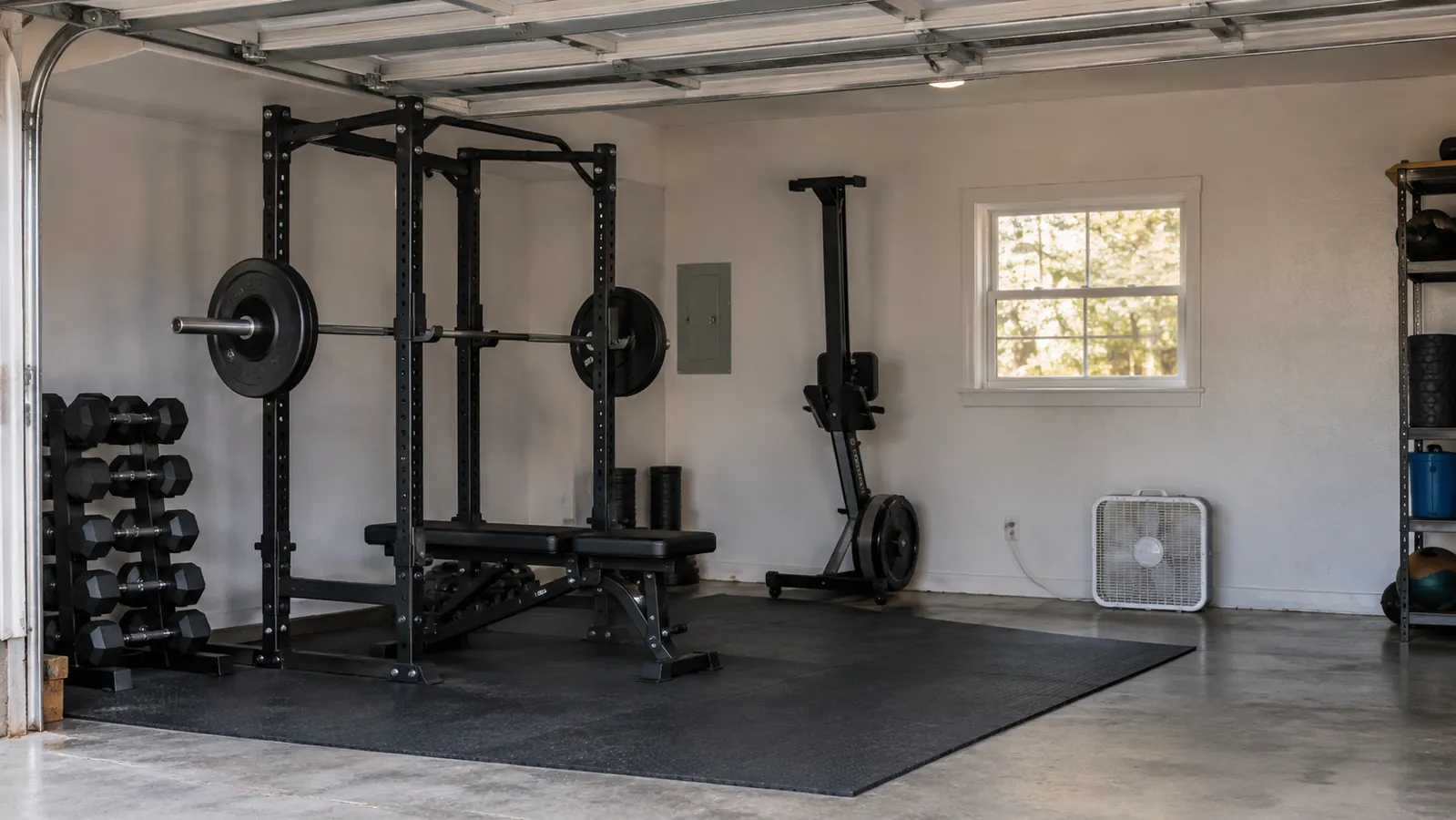
Short answer: if you have a room nobody else walks through and the feel of the stroke is the point for you, buy the water rower and enjoy it. If your gym shares a wall with the kitchen, if the truck needs that bay back, or if every machine you own has to justify its floor space every single week, the Merach Q1S is the one that actually survives. Mine sits in the left bay of a two car garage, roughly 11 by 20 feet, alongside a power rack, a bench and a pair of adjustable dumbbells. It takes 65 inches of length and 19.3 inches of width, and I have never once had to move the truck to use it.
| Merach Q1S | Water Rower | |
|---|---|---|
| Resistance feel | Magnetic, set in steps. The resistance stays flat from the catch to the finish. | Water. Resistance builds as you pull harder, so the finish feels heavier than the catch. |
| Noise in a shared house | A soft whir and your own breathing. Nothing that carries through a wall. | The tank sloshes on every stroke. Audible in the next room. |
| Footprint | 65 inches long by 19.3 wide, 42 pounds. Folds and leans against the wall. | Longer frame, and a filled tank adds serious weight. Many stand on end, which needs clear ceiling. |
| Getting it running | About 30 minutes with the parts kit and the manual. Mine was 30 flat. | Assembly plus filling the tank and getting the water treatment right before the first stroke. |
| Routine upkeep | Swap batteries, wipe the rail, check bolts once a season. That is the list. | Water needs treating and eventually changing. Tanks and seals can weep over the years. |
| Build and materials | Steel frame, 42 pounds, rated to 350 pounds. Honest, not lovely. | Wood or heavy steel around a real flywheel. Feels like furniture and holds value better. |
| What the monitor tells you | LCD reads time, distance, speed, stroke count and calories. The app carries programmed courses. | Varies widely by maker. Basic units show less, better units pair with apps and straps. |
| Warranty | 12 months from the date of purchase. | Varies by maker. Some cover the frame for years. |
| Cost to get in | Lower. | Higher. |
Read that table the way I wrote it and one thing stands out. The Merach wins the boring rows, the ones about living with a machine in a house. The water rower wins the rows about the machine itself. Which set matters more depends entirely on whether the thing has to share space with people who are asleep.
Where the Merach Q1S Wins
Start with the thing I did not expect to rank first: noise. At 5:30 in the morning, in a garage with a bedroom above it, a rower is either quiet or it is a negotiation every single time you use it. The Merach is a magnetic brake, so what you hear is the fan, a low whir, and your own breathing. My truck idling in the driveway is louder. A water rower announces every stroke with a slosh, and slosh carries through drywall in a way a whir does not. Plenty of people find that sound pleasant, and I get it. It is still a fact about 5:30 in the morning. I tested this the only way that counts. Dana went back to bed one Saturday in October 2025 after I had rowed 20 minutes with the garage door down, and she never heard a thing through the wall. On the water rower I borrowed for two weeks that same fall, she asked me on day three what the knocking was. It was not knocking. It was water moving.
Second: it gives the bay back. The frame is 42 pounds, and it folds and stands against the wall. When a load of lumber needs to come home or the truck has to sleep inside because of hail, I move it in about ten seconds with one hand. A water rower is a much heavier object once the tank is full, and while plenty of them stand on end, you need clear height and a wall you trust. Run the numbers on my bay and it is not close. Eleven feet of width, a rack on the mats, a bench, a truck outside waiting. The Merach folds into a strip of wall about two feet deep. The water rower would have taken a permanent lane. I measured both directions with a tape before I ordered, because the first thing I tried was sliding the rower along the back wall behind the rack, and that lasted one session. The pull-up bar on the rack sits about 11 inches below the ceiling and there was no way to get in and out of the machine without ducking under the bar. It went against the long wall instead, which meant the wall had to be clear, which meant the fold had to be real and not marketing.
Third: upkeep. The Merach runs on batteries. The monitor is an LCD that reads time, distance, speed, stroke count and calories. The moving parts could be counted on one hand. Wipe the rail, check the bolts once a season, swap the batteries when the numbers go dim. That is the entire schedule. A water rower has water in it. Water needs treating so it does not go cloudy, it eventually gets changed, and tanks and seals can weep over the years. None of that is hard. It is just one more line on a list that already has gutters and a furnace filter on it, and I am the guy who notices when a list gets longer. I am on the same set of batteries 14 months in, and the rail has needed nothing but a rag. The rubber mats under the rack had a strong smell for the first few weeks back in 2023 and I aired those out with the door open. The rower sat on bare concrete and never had an odor at all.
Fourth, and this one is personal: the resistance is adjustable, so I can start easy on a morning when my left knee is talking and finish a little harder. That knee has been cranky since about 2019, mostly from crawling through attics, and running is what finally made it complain loud enough to deal with. Rowing does not hurt it. Twenty minutes, three mornings a week, two of those before work and one on the weekend. I have never once had to think about tank level, water treatment or anything else except pulling. The first winter with it, the garage got down near freezing and the space heater barely kept up. I still rowed. There was nothing in the machine that cared about the cold, which is more than I can say for me.

Where a Water Rower Wins
The water rower feels better. There is no way around that and I am not going to write around it. On a water rower the resistance builds as you pull harder, so the catch is lighter and the finish is heavier. It rewards a hard drive and it lets you know when you are coasting. Magnetic resistance is flat, meaning it feels much the same at the start of the stroke as at the end. For steady 20 minute conditioning before work, flat is fine. For someone who wants to actually learn to row, flat is a compromise and I would not tell them otherwise. The two weeks I spent on a borrowed one in the fall of 2025 taught me that in about four strokes. I could feel where I was weak, and the machine made me pay for it, and my splits were honest in a way the magnetic unit cannot make them. If I were 25 and wanted to row seriously, that would decide it and this article would be short.
Second, the build. A good water rower is usually wood or heavy steel wrapped around a real flywheel, and it feels like furniture. It looks like something you would put in a living room, and a fair number of people do exactly that. The Merach is an honest steel frame at 42 pounds, rated for a 350 pound user, and it looks like what it is: a piece of gym equipment in a garage. Mine has held up fine for 14 months of steady use. I would not call it lovely, and I would not pretend it is the same class of object. Two things I checked at the 14 month mark because I check everything: the bolts on the frame were all still snug, and the rail had no rust on it despite a garage that gets humid in a Knoxville summer. That is not the same as a walnut rail, but it is not nothing either.
Third, the long game. Water rowers are built to be repaired, and a lot of makers stand behind the frame for years, which is not something the Merach does. The Merach carries a 12 month warranty from the date of purchase. That is typical at its end of the market, and it is worth knowing before you buy rather than after. If you are the kind of person who buys once and keeps a machine for fifteen years, the water rower's serviceability and resale value are real advantages. I am exactly that kind of person about tools. My 7 foot Olympic bar came off Marketplace in the fall of 2023 and I expect to hand it to Cole someday. I was not willing to be that kind of person about a rower I had not yet proven I would use three mornings a week. That is the honest version. If a water rower had been the thing that got me out of bed, I would have spent the money and never written this.
Fourteen months, twenty minutes at a time, three mornings a week. The rower I still use is the quiet one that folds against the wall.
The Rower That Fits an 11 by 20 Foot Bay
Magnetic resistance, a 65 by 19.3 inch footprint, 42 pounds, and it folds flat against the wall when the truck needs the space back. Mine has 14 months and about 180 sessions on it.
Amazon Check Today's Price on Amazon →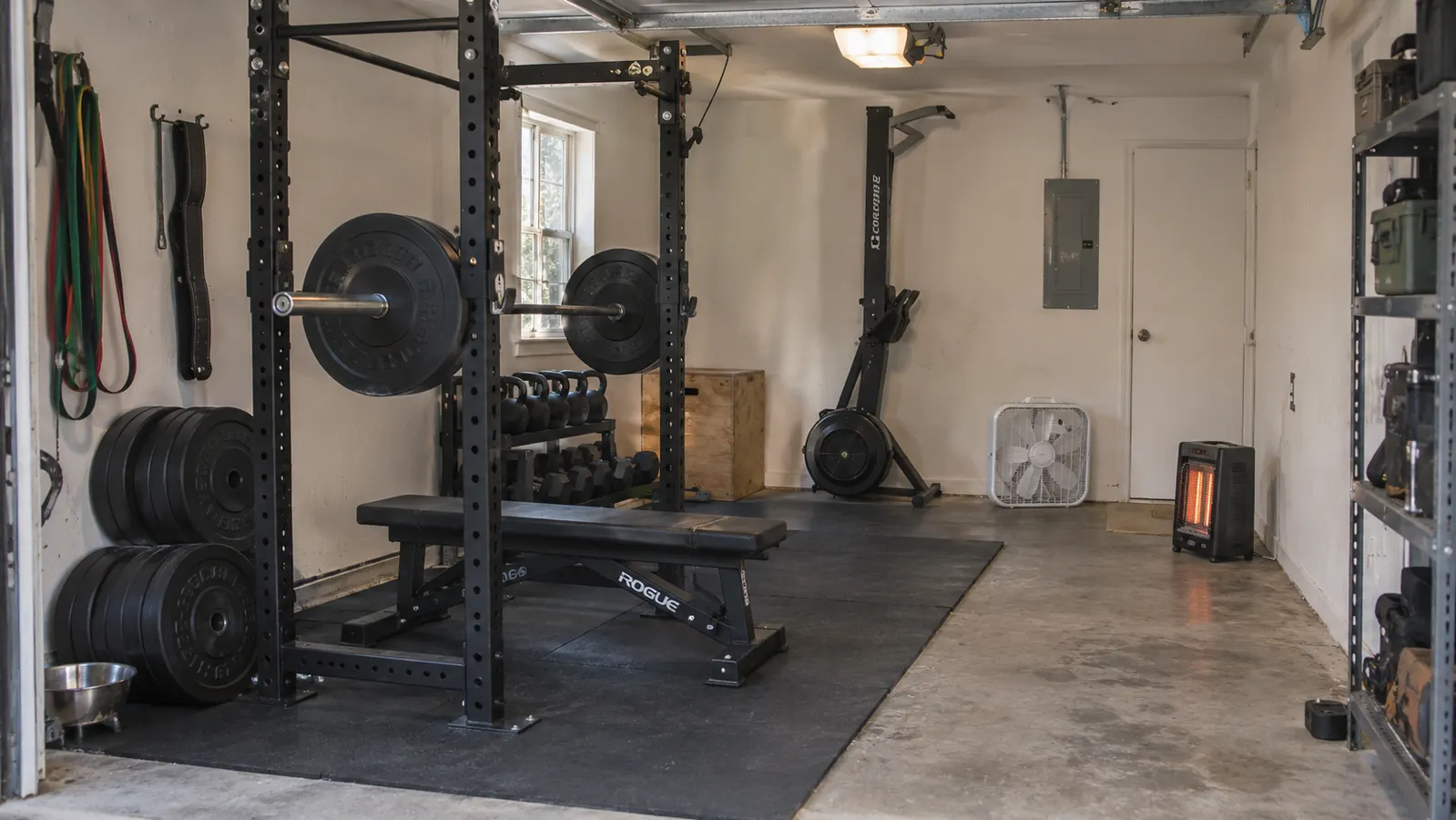
The Details That Decided It
Assembly took about 30 minutes. I have put a power rack together alone in an afternoon, so I am not the guy who calls this difficult, but 30 minutes is 30 minutes and it was accurate. The parts kit was complete, the bolts lined up, and nothing needed a file or a second pair of hands. The manual was readable. That is a lower bar than it sounds, and plenty of equipment fails it. I did it on the concrete in the empty half of the bay on a Saturday morning in September 2025, with the box flattened out under the parts so nothing rolled into the drain. Cole wandered out halfway through, watched for a minute, and asked if it was a boat. Fair question.
The monitor gives me time, distance, speed, stroke count and calories. I watch time and distance and ignore the rest. The app has courses and programmed workouts, and I use it maybe one morning in four, usually when I want somebody else to pick the pace so I stop negotiating with myself at 5:35. It is a nice extra. It is not the reason to buy, and if the app vanished tomorrow I would still row. What the monitor does better than I expected is keep me honest about pace. Twenty minutes at a steady clip is a different thing than twenty minutes of drifting, and the numbers on the LCD settle the argument before I can talk myself into an easy morning.
Here is the calculation I actually ran before spending anything. A machine used three mornings a week for 14 months is roughly 180 sessions. A machine used twice and then covered with a towel is a coat rack that ate a bay. The best rower in the world does not survive being inconvenient. A merely good one survives being easy. That is not a knock on water rowers. It is a rule about garages, and it is the rule that decided this for me. I have watched it play out the other way too. A neighbor bought a heavy machine for his basement and it is still down there, folded, under a blanket, because the stairs made it a chore. The gear that gets used is the gear with the fewest steps between deciding and doing.
One more thing, and then I will get off it. Rowing did not fix my knee and I am not going to tell you it did. What it gave me was 20 minutes of conditioning that did not make the knee worse, which is exactly what I needed once running stopped working. Anyone promising more than that from a piece of equipment in a garage is selling something.
What I Liked
- Quiet enough to use at 5:30 in the morning under a bedroom
- 42 pounds, folds and stands against the wall in seconds
- 65 by 19.3 inch footprint fits a single garage bay
- Adjustable magnetic resistance, easy on a cranky knee
- LCD reads time, distance, speed, stroke count and calories
- About 30 minutes to assemble
Where It Falls Short
- Flat resistance feel, not the build-through-the-stroke pull of water
- 12 month warranty only
- Plain steel frame next to a wood water rower
- Not the machine to buy if learning proper technique is the goal
- The app is a bonus, not a reason to buy
Who Should Buy Which
Buy the water rower if you have a dedicated space where noise does not travel, if the feel of the stroke is the whole point for you, and if you want a machine you will keep and service for a decade. Buy it if you row for the rowing and not just for the conditioning. Buy it if you have the floor to give and nobody sleeping on the other side of that wall. I would not argue with that buyer for a second. They are getting the better machine and they know it.
Buy the Merach Q1S if your gym is a garage bay, a spare bedroom or a corner behind a couch, and the machine has to be quiet, light and out of the way. Buy it if you are coming back from an injury or a long layoff and you need 20 minutes of conditioning that does not beat you up. Buy it if you would rather put the difference into plates, flooring or a better bench. That was my call. Fourteen months and about 180 sessions in, having measured the alternatives, having borrowed the one that feels better, I would make it again.
Quiet, 42 Pounds, and It Folds Against the Wall
If the bay has to hold a truck and a rack, this is the rower that keeps its spot instead of becoming the thing you walk around.
Amazon Check Today's Price on Amazon →