
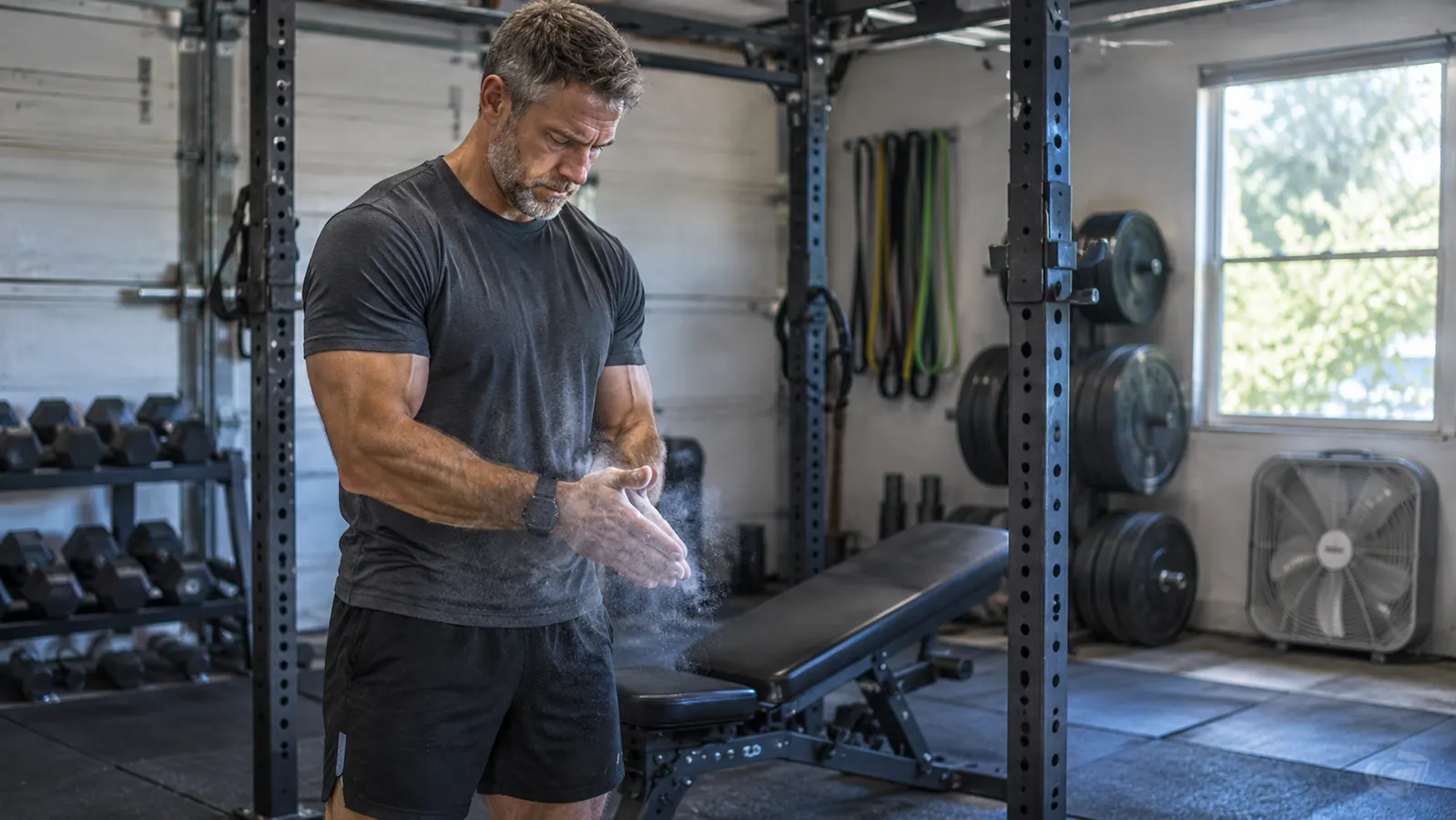
The first bench in my garage was a hand-me-down flat bench that rocked about a quarter inch on the concrete. I would load the bar, lie back, and feel it shift under my shoulder blades. Not enough to dump me. Enough that I thought about it on every set. I put up with that for a winter, then in April 2024 I replaced it with the YOLEO adjustable bench, and the difference was not subtle. I am 46, I run HVAC service calls out of Knoxville, and I lift in the left bay of an 11 by 20 foot garage from 5:30 to 6:20 in the morning before work.
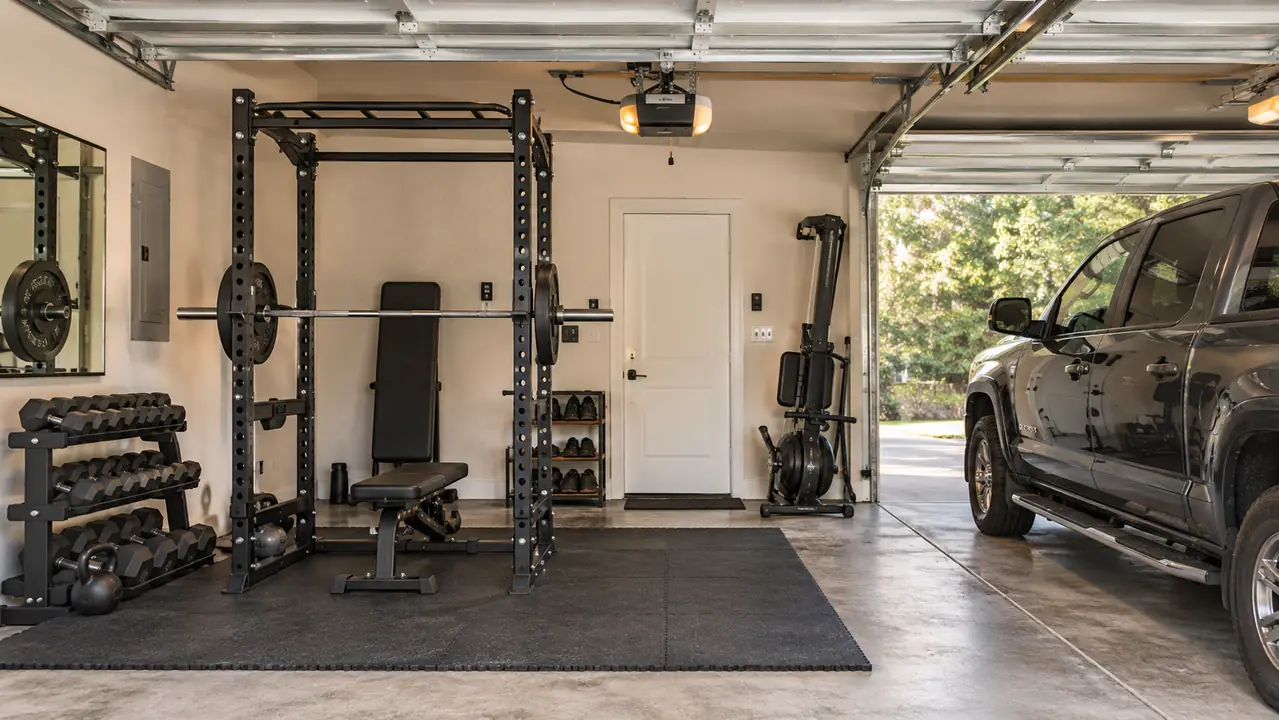
That bay has to hold everything: a rack, mats, a barbell, a pair of adjustable dumbbells, a rower, and a truck that parks on the other side. Nothing gets in unless it earns the square footage. The YOLEO bench has been in there about 18 months now, used for bench press inside the rack, incline dumbbell press, one-arm rows and step-ups for a cranky left knee. Here is what actually qualified it, in the order it mattered to me.
One bench that covers flat, incline and step-ups in a single footprint
The YOLEO Adjustable Weight Bench is 41 inches deep, 23.2 pounds, and rated to 827 pounds. Check the current price and the size chart before you measure your bay.
Amazon See today's price on Amazon →It takes a 41 by 12.6 inch footprint, not a corner of your garage
The listed dimensions are 41 inches deep by 12.6 inches wide. In my 11 by 20 foot bay that drops inside the rack uprights with the walkway to the truck still clear. I taped the footprint on the mats before ordering, which took two minutes and saved me from buying something that blocked the door. If your space is tighter than mine, measure first. A bench you have to move to walk past is a bench you stop using by February.
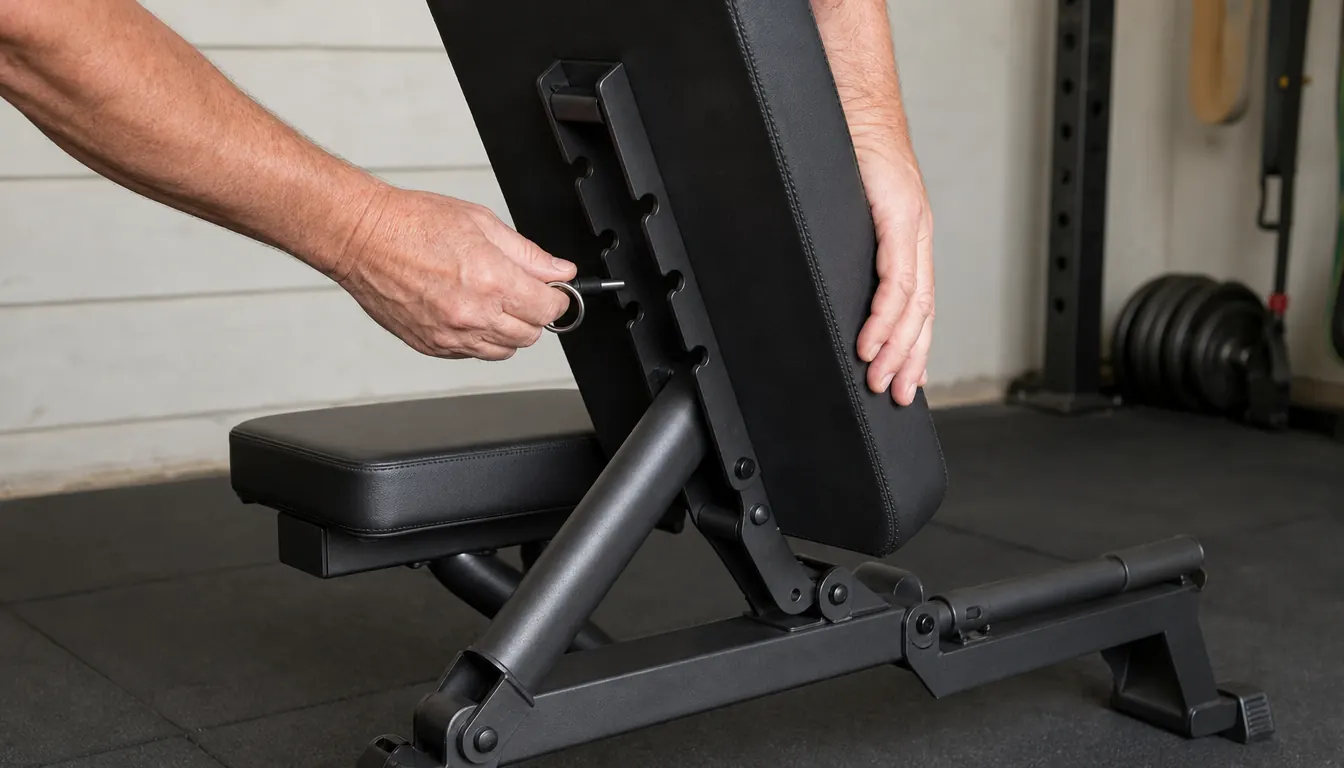
It shows up 98 percent assembled, so you are not losing a Saturday
Open the box, insert two pins, start lifting. No tools, per the listing, and most people are done in seconds. Mine took closer to a minute because I read the pin holes twice. Compare that to the rack I assembled alone in one Saturday afternoon over about two and a half hours, and you understand why this matters. Assembly time is not a bragging right. It is the difference between a piece of gear that gets used the week it arrives and one that sits in a box until you find a free afternoon.
827 pounds of rated capacity means the bench is not the weak link
The frame is alloy steel, independently tested and ASTM-certified to 827 pounds, with a stated maximum user weight of 330 pounds. I am 5 foot 10 and around 200, and my bar work tops out near 230 pounds of iron off Facebook Marketplace. I am nowhere near the ceiling, and that is the point. I do not want to think about the bench while I am under a bar at 5:30 in the morning with nobody in the garage but me. Rating is not a number I brag about. It is one I stop worrying about.
Seven back positions did more for my pressing than a new program
The back pad adjusts through seven positions, the seat through four, the leg through three, which the listing totals at 84 combinations. I use three of them: flat for bench press inside the rack, one notch up for incline dumbbell press, and a steeper setting for shoulder work. That is it. But those three settings are the difference between pressing at an angle my shoulder tolerates and pressing at an angle it does not. I did nothing for twenty years and started lifting again at 43, so joint tolerance is the whole game now.
The seat and leg adjustments close the gap at your hips
On a cheap adjustable bench the back pad goes up and the seat stays where it was, so you get a gap you can drop a hand into at the bottom of an incline press. The seat on this one moves with the back, and the leg holder adjusts separately. I noticed it the first session because I did not notice anything, which is the review. Four seat positions and three leg positions mean the incline setting actually fits a body instead of approximating one. Small thing. It is the small thing I use every session.
At 23.2 pounds you can move it with one hand between sets
The bench weighs 23.2 pounds. My hand-me-down weighed more than double that and had a mind of its own on rubber mats. I move the YOLEO out of the rack when I want to squat, and back in when I want to press, one hand on the pad, no dragging, no scraping. Twenty three pounds is light enough to reposition mid-session and heavy enough that it does not slide when you set up on it. In a shared bay where the rack does three jobs, being movable is a feature, not a compromise.
One-arm rows stopped walking the bench across the floor
I row two mornings a week plus one weekend session. On the old bench, a set of one-arm rows meant chasing it two inches toward the garage door each time. The stability comes from the base sitting flat and the pad not flexing when you load one side. I do not have a spec for that, I have a floor with mat seams in it, and the bench stays put on the seams now. That is about as honest as a stability claim gets in a garage with uneven concrete under the rubber.
Step-ups for a knee that has spent years in attics
My left knee is cranky from crawling through attics on service calls. Running made it worse, which is why a rower showed up in the bay in September 2025. The bench does the other half of that job. Set the back pad flat and the seat low, and it works as a step-up platform at a height I can control, which is more than I can say for a stack of plates. I am not rehabbing anything and I am not qualified to tell you to. I am telling you the bench pulled double duty and that is why it stayed.
It finally made the adjustable dumbbells worth owning
I bought a pair of Lifepro adjustable dumbbells in November 2024, 5 to 25 pounds each. Before the bench had a decent incline, they were mostly curls and lateral raises. Now they carry my incline press, my rows and my warm-up sets, and my son Cole uses them when he trains with me on weekends. Twenty five pounds tops out my pressing on dumbbells, so heavy work stays on the barbell. That is fine. The bench is what turned a limited pair of dumbbells into a full second training day.
It replaced the flat bench instead of joining it
This is the reason the other nine matter. An 11 by 20 foot bay with a truck on one side does not have room for a flat bench and an adjustable bench and a rower and a rack. It has room for one bench. The YOLEO does flat, incline and step-ups, weighs 23.2 pounds, and moves out of the rack in one hand. If it had been a second piece of equipment instead of a replacement, it would be leaning against the wall right now with a paint can on it. That is the test, and it passed.
What I'd Skip
If you already own a solid flat bench and your training is entirely flat barbell work inside a rack, do not buy this. It solves a problem you do not have, and the money is better spent on plates or a second pair of dumbbells. I would also skip it if you are near or over the 330 pound stated maximum user weight, no matter what the frame is rated to, because that is the number the manufacturer puts on the user and I am not going to argue with it on your behalf. And if your garage floor is sloped enough that a level will not sit still, fix the floor first. No bench is stable on a slope, mine included.
I have loaded this bench with a bar at 5:30 in the morning with nobody else in the garage, and not once have I thought about the bench while I was under it.
If you only have room for one bench, make it the one that does three jobs
41 inches deep, 23.2 pounds, alloy steel frame, 98 percent pre-assembled. Measure your bay, then check the current price.
Amazon See today's price on Amazon →