
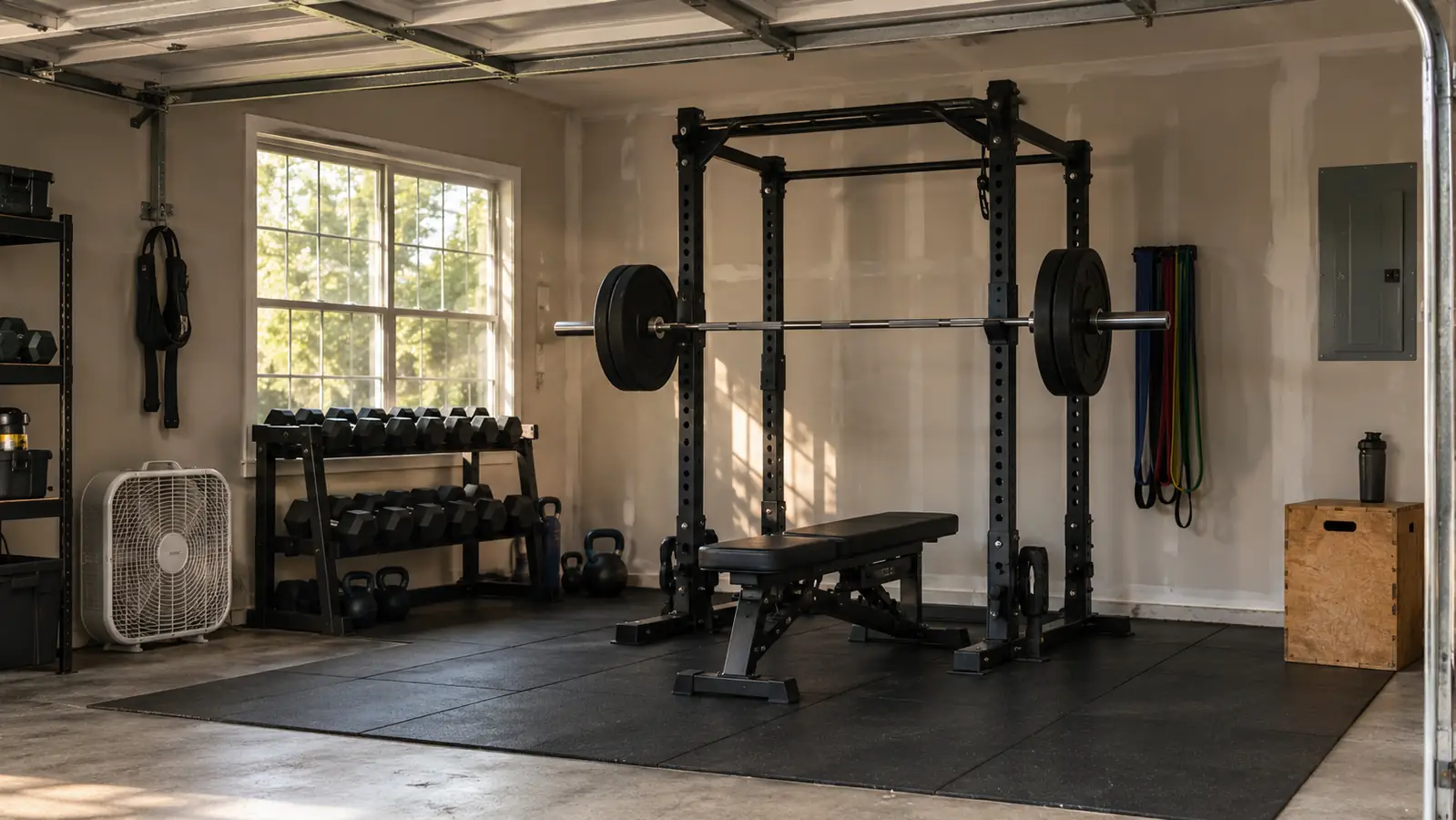
Concrete is not a floor you can leave alone. It looks permanent until the first time you set a deadlift down and a dime-sized chip pops out of the slab. Six months into lifting in my garage I had a rough circle of chipped spots under the rack, a gray dust that got on everything, and a bar slam loud enough that Dana could hear it in the kitchen with the door shut. That was the fall of 2023. I bought the IncStores Tough Rubber Roll that October, two 4 by 10 foot rolls laid side by side under my rack and bench, and I have been lifting on it for about two years.
This is not a review with a score at the top. It is the list I would hand a friend who asked whether rubber is worth the trouble in a garage. Ten things the floor actually does, in roughly the order I noticed them, and then the one thing I would skip if I were laying it down again tomorrow.
The floor goes down before the rack ever comes in
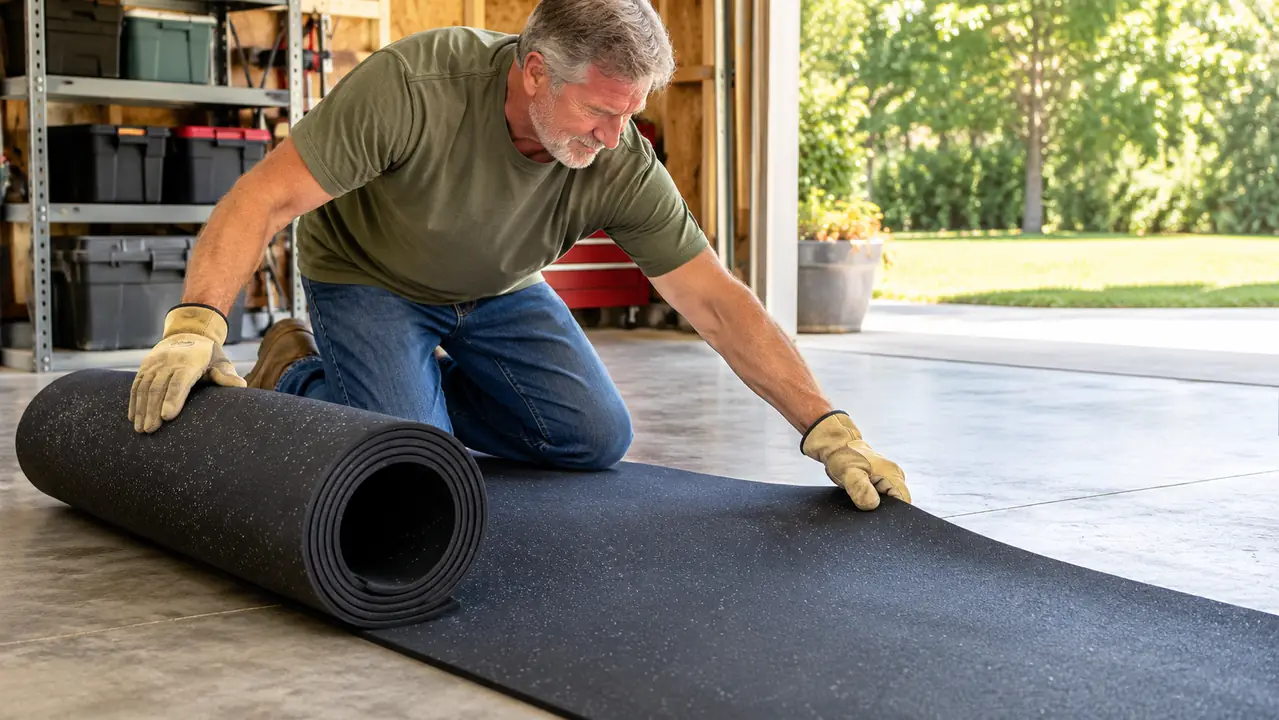
3/8 inch thick, 4 by 10 feet per roll, 40 square feet a piece. Two rolls covered my 8 by 10 lifting area with one straight seam down the middle. The listing shows every thickness option in one place.
Amazon See the IncStores roll on Amazon →It takes the impact so the slab does not
The first job is the boring one. Rubber absorbs the hit and concrete never sees it. Before the rolls went down I had chips under the rack from reps I set down a little hot, and every chip turned into a small pile of grit that migrated across the whole bay. Two years of the same lifts at the same weights, and the concrete under the mats is exactly the concrete that was there in October 2023. The mats show the wear instead. There is a shallow dimple where I drop deadlifts. That is the mat doing the job it was bought for.
Turns a crack into a thud
I did not buy this for the floor. I bought it for the noise. My bay is attached to the house, and a dropped bar on bare concrete sounds like somebody swinging a hammer at the siding. Rubber does not silence anything, nothing does except putting the bar down like an adult, but it changes the character of the sound completely. Dana stopped asking what fell over. The bar still makes noise. It just does not make the noise that carries through a wall and into a kitchen.
3/8 inch is the right middle for a home garage
IncStores sells this roll in 1/4 inch for lighter setups, and in 1/2 or 3/4 inch for commercial gyms and horse stalls. I went with 3/8. A quarter inch felt thin under a 7 foot bar and 230 lbs of iron, and the thicker rolls would have lifted my rack higher than I wanted under an 8 foot ceiling. Three eighths is enough that the mat does not bottom out under a loaded bar and thin enough that I step onto it without thinking about it.
Two rolls give a clean 8 by 10 under the bar
Each roll is 4 feet wide and 10 feet long, which is 40 square feet. Two of them side by side gave me 8 by 10, the footprint of the rack and bench with room to step back for a press. The seam between the two is one straight line down the middle of the bay, not under an upright and not where my feet go. If you have a 10 by 20 bay you can lay four rolls and cover most of it. Measure first. Trimming this material to fit around a corner is not a job I would wish on anybody.
Keeps the rack where I set it, no drilling
I never bolted my rack to the slab. It sits on the mats and in two years it has not walked. The rubber grips the concrete underneath and the rack feet grip the rubber, and the uprights are within a quarter inch of where I set them in 2023. If your slab is out of level or your rack already rocks, fix that first. Rubber is not a leveling shim and it will not hide a bad frame. What it does is hold a square, flat setup in place through squats and pull-ups.

Kinder to a cranky knee on step-ups and rows
My left knee is not what it was, and crawling through attics for a living is the reason. Step-ups on a bare slab felt like a chore. Step-ups on rubber feel like a step. Same story for one-arm rows with a hand planted on the floor and the little bit of floor work I do on bench days. There is some give without being squishy enough to throw off a lift. That sounds minor until you are 46 and it is the difference between doing the step-ups and quietly skipping them.
Wipes clean with a damp cloth
Garage floors collect things. Road salt off the truck, sawdust, whatever the space heater drags in with it. The care instruction on this roll is a damp cloth, and that is about the size of it. Sweat and dust come up with a rag. Oil takes a bit more effort. What matters is that rubber does not hold a stain the way raw concrete does. A stain on a slab is permanent and you stare at it every session. A mark on this mat is usually something you stop noticing inside a week.
Keeps the slab out of the conversation
An 11 by 20 bay with a chipped, stained, dusty slab under a squat rack is a thing a buyer notices and prices in. A floor that looks deliberate is not. The rolls come up if I ever need them to, and underneath them the concrete is in the same shape it was two years ago. That is worth something even in a house I plan to stay in. It is also the difference between a bay that reads as a gym and a bay that reads as a pile of equipment on dirty concrete.
Quiet enough to lift at 5:30 in the morning
My schedule runs 7 to 5 with on-call weekends, so lifting happens from 5:30 to 6:20 four mornings a week before work. That only works if I am not waking the house. The mats plus some care setting the bar down keeps the noise inside the garage. Not silent. Never silent. But the rower sitting on the bare concrete next to the mats is louder than anything I do on the rubber. If you train early or late, this is the real reason to buy, more than anything else on this list.
The thickness ladder and the 5 year warranty mean buying once
IncStores lists a 5 year manufacturer warranty on this roll, and the range of thicknesses means you can match the material to the job instead of buying the same thing twice. Mine has been down two years with no lifted corners and no cracking along the seam. The only complaint I have is the smell. Strong rubber for the first few weeks, aired out with the garage door open and a fan running. After that, nothing. Everything else about it has held up.
What I'd Skip
First, I would skip covering the whole bay. I did 8 by 10 under the rack and bench and left the rest bare, and I have never once wished the other half was rubber. The rower lives on concrete on purpose, and sweeping out a partly bare floor is easier than sweeping a fully covered one. Covering everything also means buying more material than the job needs and cutting more of it, which is the part of this project that actually eats a Saturday.
Second, I would skip buying thin. A 1/4 inch roll is a real product and it is fine for a floor you walk on or a light setup with dumbbells. Under a barbell and iron plates, 3/8 inch is the floor of what I would trust, and if your ceiling gives you the room for 1/2 inch, a heavy lifter should take it. Nobody ever regretted buying the mat that was slightly too thick. Plenty of people regret the one that was too thin.
Two years of the same lifts at the same weights, and the concrete under the mats is exactly the concrete that was there in October 2023. The mats show the wear instead.
The floor is the first thing you buy and the last thing you think about
3/8 inch, 4 by 10 feet, 40 square feet per roll, 5 year manufacturer warranty. Two rolls and one afternoon got my rack off the slab for good. Measure your bay before you order, then measure it again.
Amazon See the IncStores roll on Amazon →