
Short answer: if the floor is going under a rack in a garage, the IncStores Tough Rubber Roll is the easier floor to own, and a 4 by 6 horse stall mat is the tougher single slab. Those are two different compliments, and most comparisons pick one and pretend the other does not exist. I have had the IncStores rolls down for about two years. I have also moved enough stall mats for friends and for one barn job to know exactly what they feel like underfoot and how they behave when you have to wrestle one into place. The split is this. The roll wins on coverage, seams and install time. The stall mat wins on thickness and on how much abuse a single square foot will absorb before it cares.
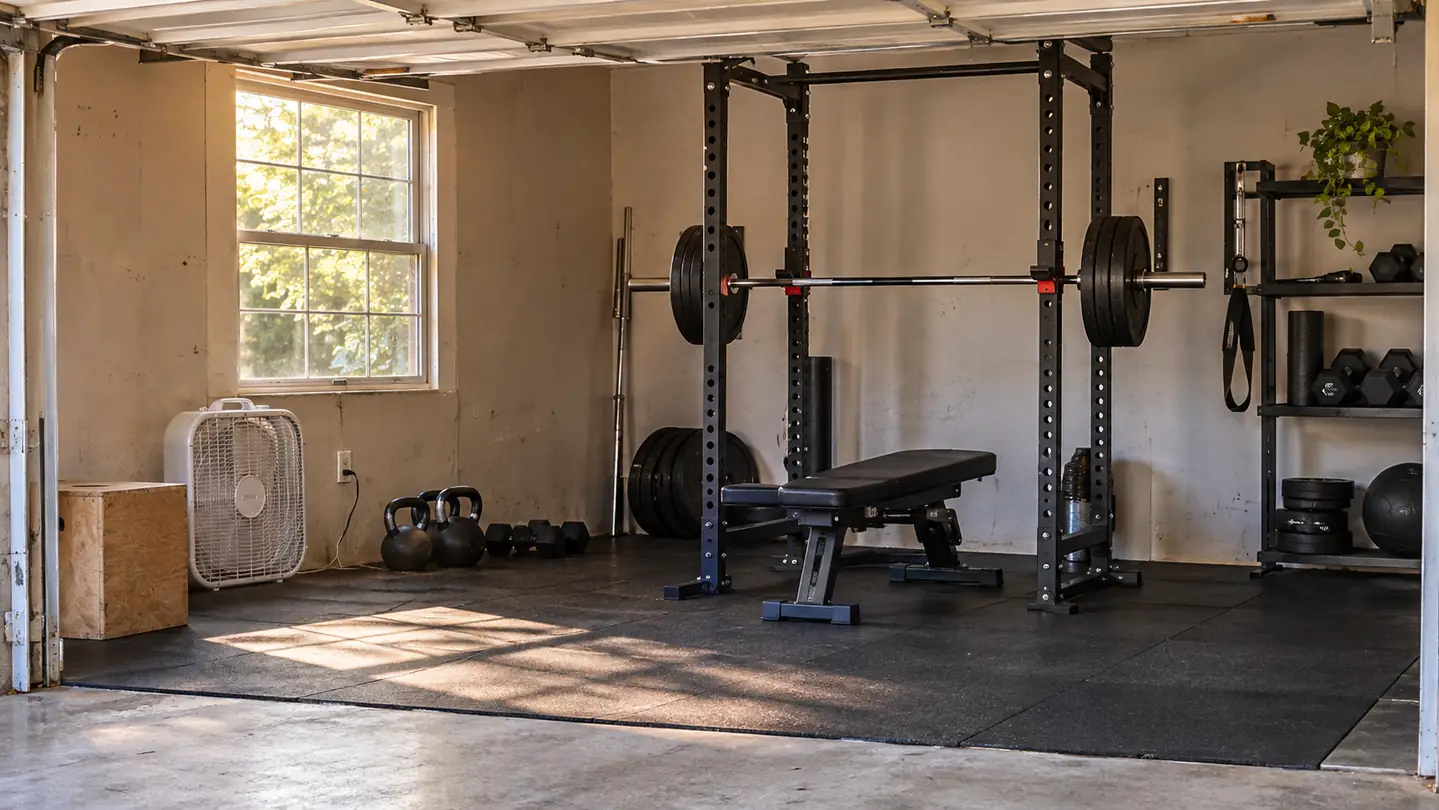
The space I am working with is the left bay of a two-car attached garage in Knoxville, roughly 11 by 20 feet, bare concrete, one window, a box fan in July and a small space heater in January. The truck lives in the right bay. I laid two 4 by 10 foot rolls side by side in October 2023 to make an 8 by 10 foot lifting area under the rack and the bench. That is 40 square feet per roll, 80 covered, one seam down the middle, and that is the entire install. Everything below is measured against that floor and against a stall mat of the kind you would haul out of a farm store.
| IncStores Tough Rubber Roll | Horse Stall Mat | |
|---|---|---|
| Coverage per piece | 40 sq ft in one 4 x 10 ft sheet | About 24 sq ft per 4 x 6 ft mat |
| Thickness | 3/8 inch as tested; 1/2 and 3/4 also sold | Commonly 3/4 inch |
| Seams across an 8 x 10 area | One seam between two rolls | Four mats, so several seams and edges to line up |
| Getting it home | Ships rolled to the door, one person can carry it | Usually a farm store run and a truck bed |
| Swapping a damaged section | Cut out and patch, or replace the piece | Pull one mat, drop in a new one |
| Face texture | Solid, unpatterned rubber | Most carry a molded top for grip |
| Written warranty | 5 years | Often none in writing |
| Best for | A lifting area in a garage, basement or spare room | Stalls, wash bays, rooms that see water and hooves |
Read that table twice before you commit. Four rows favor the roll, three favor the mat, and one is a wash because a horse stall and a squat rack are not the same job. The rows favoring the roll are all about living with a floor: how much of it arrives in one piece, how many edges you have to line up, and how long the install takes. The rows favoring the mat are all about what happens to one square foot when something heavy lands on it, or when that square foot gets wrecked.
Where IncStores Wins
Coverage and seams, mostly. A 4 by 10 foot roll gives you 40 square feet in a single sheet. A 4 by 6 stall mat gives you about 24, so an 8 by 10 lifting area takes four mats, and four mats means a grid of edges that chalk dust, grit and whatever the truck drags in all find and hold. I have one seam in my entire lifting area. It has not lifted, curled or caught the vacuum in two years. When I sweep the garage on a Saturday, the broom runs across the floor instead of tripping over mat corners.
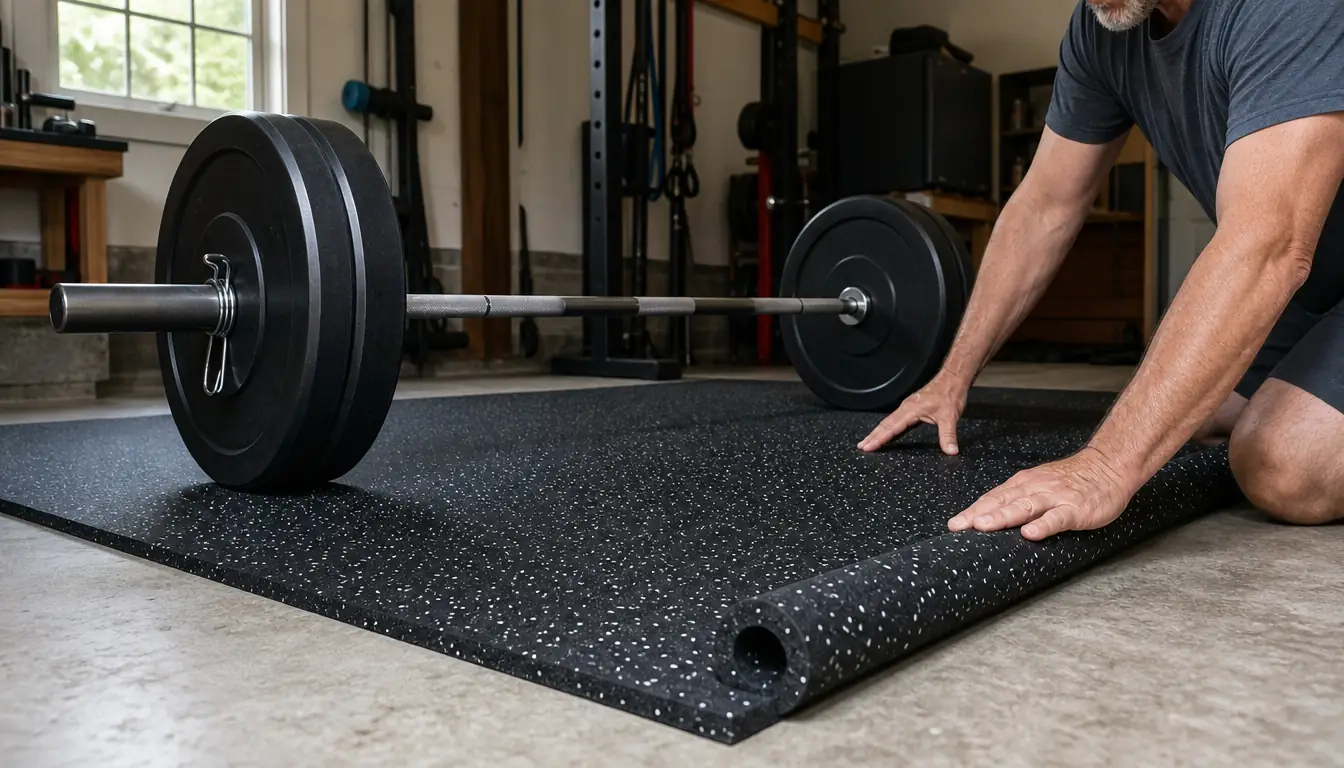
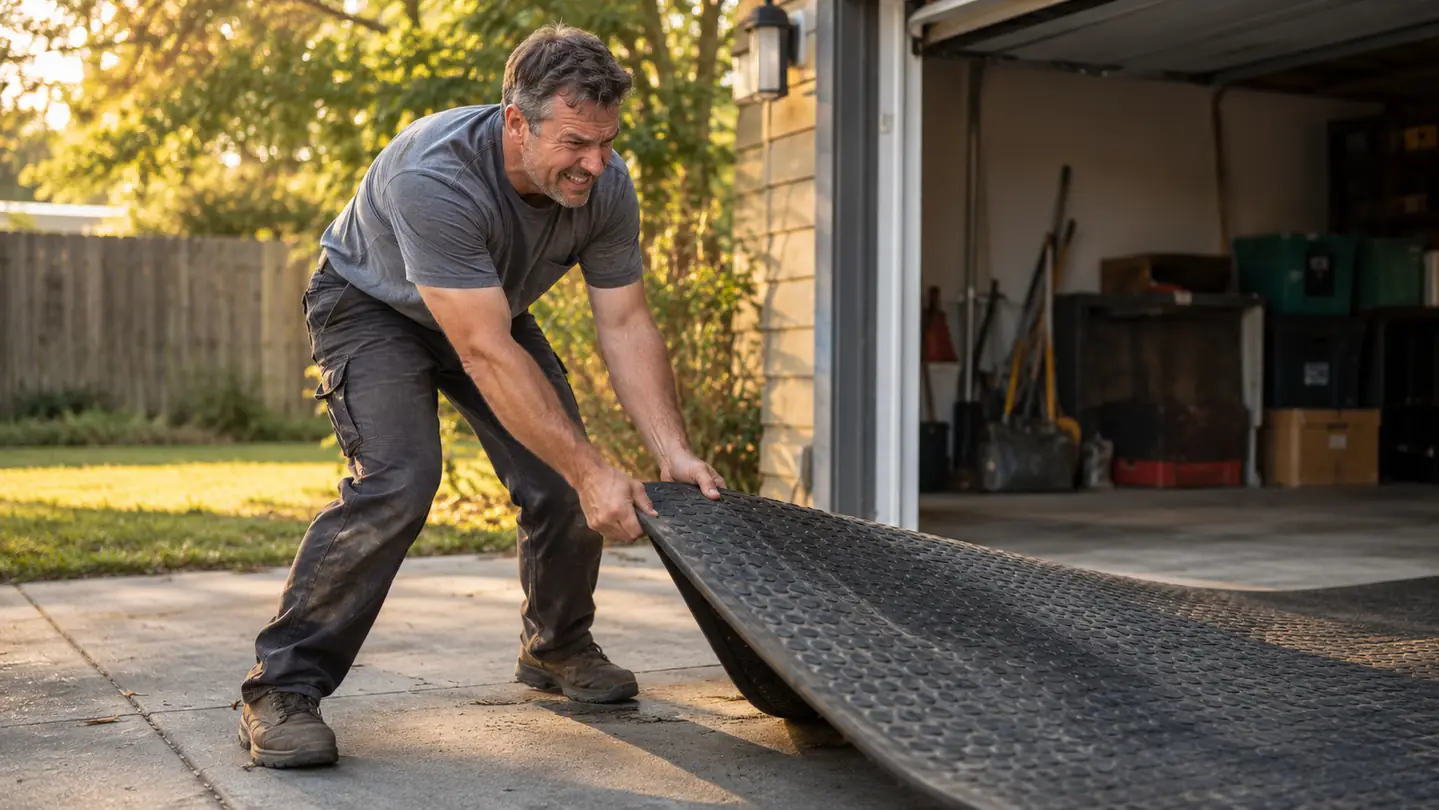
Install time is the second win, and it is not close. The rolls came to the door, I carried them in one at a time, unrolled them and let them sit. The rubber had a strong smell for the first few weeks and I aired the garage out with the door up. After that, nothing. No adhesive, no clips, no edge trim unless you want it. A stall mat is the opposite experience. You are dragging a slab that fights you the whole way, and you are doing it four times instead of twice, on a Saturday when you would rather be lifting.
There is a written 5 year warranty on the IncStores line, which is more than most farm store mats come with. The care is a damp cloth, which tells you how seriously the maker treats it as a surface rather than a consumable. The sizing range is the other practical thing. The line covers 12 to 200 square feet in a single seamless piece depending on the roll, so you can fit a rack footprint, a full bay, or a whole basement without piecing anything together.
One point that cuts against my own case here, so I will make it now. The same company sells 1/2 inch and 3/4 inch rolls meant for commercial floors and horse stalls, plus a 1/4 inch for lighter setups. So the thickness argument in the next section is about this specific 3/8 inch roll, not about the brand being unable to build a thicker floor. If you want 3/4 inch rubber and you want it seamless, that option exists and it is the same brand.
Where Horse Stall Mats Win
Thickness and mass, and I am not going to pretend otherwise. This roll is 3/8 inch. A stall mat commonly runs 3/4 inch, which is twice the rubber under the bar. If you are pulling heavy deadlifts and setting the bar down hard from the top, that extra half inch does real work. It absorbs more of the drop and spreads the load over a wider footprint. My 3/8 inch floor has taken a used 7 foot Olympic bar and about 230 lbs of iron for two years with no problem, but I set the bar down with control every time. If you plan to drop it, buy thicker. That is the honest version.
Repair is the second genuine win. A stall mat is a tile. Gouge one, drag a piece of equipment across a corner, spill something that eats rubber, and you pull that one mat and drop in another. A roll is a sheet. Damage in the middle of it means a patch or a full replacement, and a patch is never invisible. The same logic applies to layout. If you think you might reconfigure the garage in three years, tiles move one at a time and a roll gets rolled back up and wrestled into a new shape.
Texture and availability round it out. Most stall mats come with a molded top that gives you grip underfoot. The IncStores roll is a solid, unpatterned surface. Neither is slippery on dry concrete, but in a damp garage in February the molded texture helps if your shoes are worn. And a farm store is a place you can walk into, put a hand on the mat, and haul it home the same day. That is worth something when you are mid project and do not want to wait on a delivery window.
The last thing in the mat column is that it does not care. It is a chunk of rubber with no finish to wear, no face to keep clean and no expectation of looking like anything. If your space is going to get wet, get hosed out, or get used by something other than a barbell, the mat is the tool for that and the roll is the wrong purchase.
Two years, four mornings a week, one seam that has not lifted, and a slab that has not chipped once. The 3/8 inch roll did the quiet part of the job.
The floor that stopped my dropped plates from chipping the slab and travelling into the kitchen
Two 4 by 10 foot rolls covered my 8 by 10 lifting area in an afternoon, with one seam down the middle. If your bare garage concrete is marked up and the bar noise carries through the house at 5:30 AM, this is the fix I actually used and still stand on.
Amazon Check Today's Price on Amazon →What Two Years on the Rolls Actually Looks Like
Roughly 400 sessions in. The concrete under the rack has not chipped since October 2023, which was the entire reason I bought it. Before that, every missed catch and every set-down left a mark, and I was starting to see them add up. Now those impacts land on rubber. The seam down the middle is still tight. The edges have not curled, which surprises me, because that garage swings from humid East Tennessee summer to a cold slab in January and back. The only wear is cosmetic. There is a light sheen where my feet go, and chalk does not sweep off the surface as easily as it does off bare concrete. A damp cloth brings it back.
Noise is the part I underrated. The plates were ringing into the kitchen before. Now the same set-down is a thud you hear but do not flinch at from the next room. It is not soundproofing and I would not sell it as such. It is a floor doing what a floor should do, which is soak up some of the energy instead of passing all of it into a slab that acts like a drum.
The rower still sits on bare concrete beside the mats, and the dumbbells live on the floor beside the bench on their trays. That was deliberate. I wanted the rubber where the iron lands, not across the whole bay, and two years in I would lay it out the same way. If you are short on space, think about where the weight actually goes before you cover everything.
What I Liked
- Lays down in one piece, so an 8 by 10 area needs two rolls and one seam
- 3/8 inch rubber stopped plate drops from chipping the concrete slab
- Takes the ring out of dropped plates before it reaches the rest of the house
- 5 year written warranty and a damp cloth for care
- Rolls back up and moves if you rearrange the garage
Where It Falls Short
- Strong rubber smell for the first few weeks, needs the door open
- 3/8 inch is thin for heavy dropped lifts, 1/2 or 3/4 is the better call there
- A damaged spot in the middle means a patch, not a swap
- Solid surface holds chalk dust until you wipe it
Measure Your Space Before You Order Either One
This is the part people skip and then get wrong. My bay is about 11 by 20 feet, but I did not cover 220 square feet. I covered 80, because 8 by 10 is where the rack, the bench and the bar live, and the rest of the floor is walkway, storage and the rower. Two 4 by 10 foot rolls, butt them together along the 10 foot edge, and you are done. Order the coverage, not the room.
Then measure the clearance under whatever you are standing in front of. My ceiling sits about 11 inches above the pull-up bar at the top of my rack, which is why I do strict pull-ups and never kip. A floor adds a little height under everything you own, and 3/8 inch is not much, but it is not nothing when you are already tight. Write the numbers down before you buy. It takes four minutes and it saves a return.
Who Should Buy Which
Buy the IncStores roll if the floor is going into a garage, basement or spare room under a rack, a bench and dumbbells, and what bothers you is chipped concrete, noise moving through the house and an install you can finish in an afternoon. Buy it in 1/2 inch or 3/4 inch rather than 3/8 inch if you are pulling heavy and dropping the bar from the top. Buy it if you want the job done once and not thought about again.
Buy horse stall mats if your situation is closer to a barn than a gym: standing water, wash downs, hooves, or equipment that gets dragged around. Buy them if you want to see and touch the rubber before you commit, or if you expect to reconfigure the space and want to move it one tile at a time. Buy the thicker mat if the bar is coming down hard and there is no control in the set-down. None of that is a knock on the roll. It is simply a different job, and the wrong tool for it stays the wrong tool no matter how well it is made.
A floor you lay once and stop thinking about
The 3/8 inch roll has been under my rack since October 2023 and the slab underneath is still unmarked. Measure your footprint, order the coverage you need, plan on a couple of hours, and let it flatten overnight with the garage door open.
Amazon Check Today's Price on Amazon →