
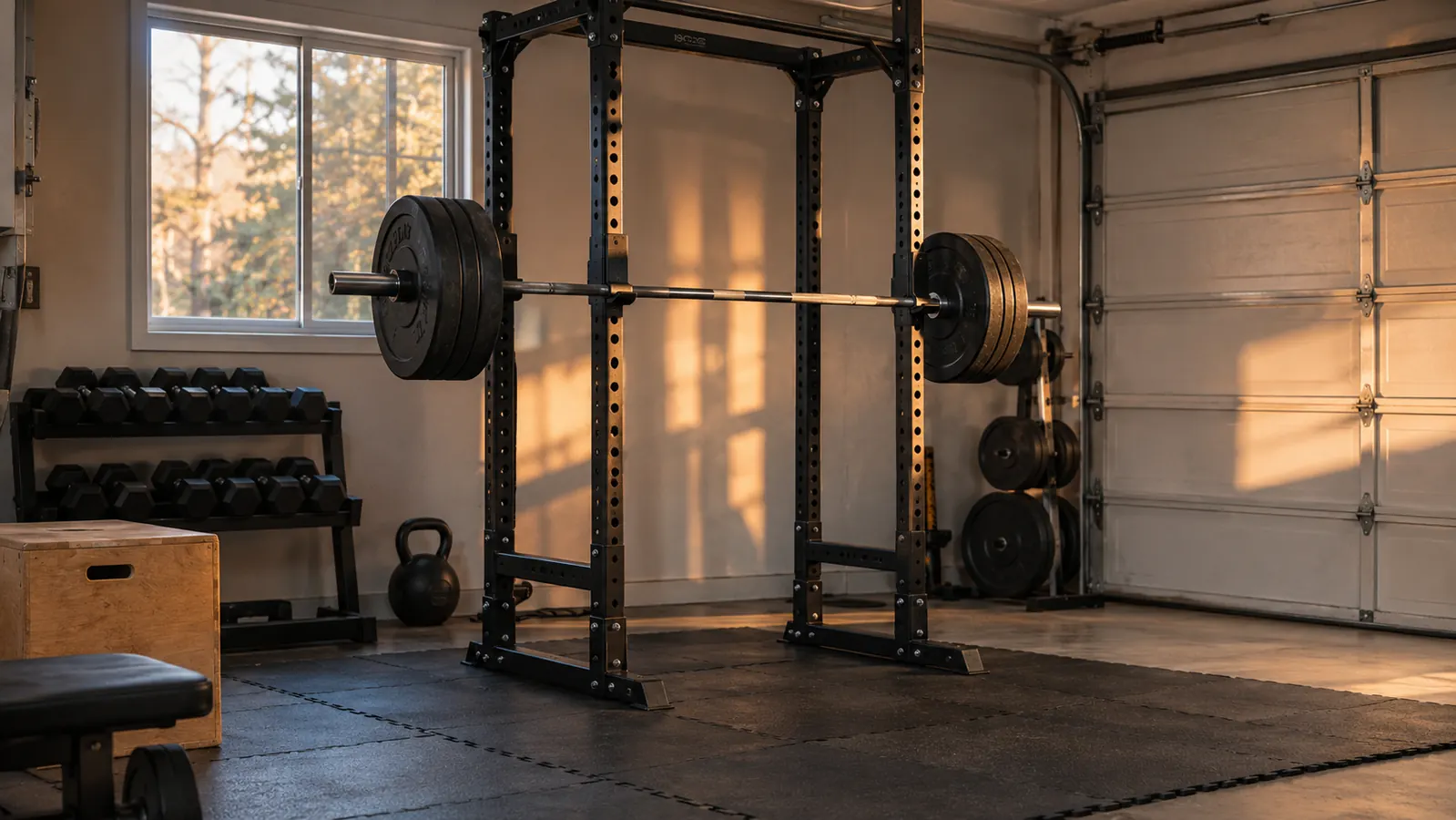
The number that decided this purchase for me was 85. That is the assembled height of the CAP Power Rack in inches. My garage ceiling is 96 inches of drywall with a light fixture hanging in the middle of it, and eleven inches of clearance between the top of the pull-up bar and that ceiling is what I had to work with. That number is the reason this rack ended up in my garage instead of a taller one that would have suited my ego better. Everything else in this review comes second to it.
I have owned it about two years, bought in October 2023 a week after I laid rubber flooring down over the concrete. It has been through four mornings a week of squats, overhead pressing and pull-ups, plus whatever my fifteen year old son decides to try on a Saturday morning when he is feeling strong. This is not the rack I would spec for a college weight room, and I am not going to write a review that pretends otherwise. What follows is the honest version, including the parts the listing photos leave out and the parts I only learned after the return window closed.
Some background, because it explains every decision I made. I am 46, I work HVAC service, and my schedule runs 7 to 5 with on-call weekends. The commercial gym twenty minutes away did not fit that life and I let the membership lapse three years ago. The left bay of my two-car garage is roughly 11 by 20 feet with a bare concrete floor and an 8 foot ceiling, and the truck parks in the right bay. If a piece of equipment does not survive in that space, it does not survive with me.
The Quick Verdict
A square, stable rack that clears an 8 foot ceiling and fits a tight garage bay. Two years in, it has earned its place on the mats. It also has real limits, and you should know them before you order.
Amazon Check Today's Price →Built for the Ceiling You Actually Have
46 inches wide, 50 inches deep, 85 inches high. If ceiling height is the reason you have put off buying a rack, measure those three numbers against your space first.
Amazon Check Today's Price on Amazon →How It Has Held Up in Daily Use
Four mornings a week I am in that bay from 5:30 to 6:20, and the rack is the first thing I touch and the last thing I put away. Squats on two of those mornings, overhead press on one, pull-ups at the end of every session before I walk back in the house to shower for work. Two years of that is a lot of racking and unracking, and it is where cheap racks show themselves, at the point where the steel meets the bolts.
Mine has stayed tight. I go over the hardware with a wrench twice a year, once in November when I drag the space heater out and once in March when I put it away, and in two years it has needed about a quarter turn on two bolts. That is the entire maintenance log. Nothing has wallowed out, nothing has stripped, and the uprights have not developed the wobble I can feel with my hand when a rack is going soft.
The pull-up bar is the piece I was least sure about. With the ceiling that close I do strict pull-ups with my head kept forward and my knees bent, and I do not kip. Not because I am above it, but because there is no room for it and I like my drywall where it is. If swinging on a bar is part of how you train, be honest with yourself about your ceiling before you buy any rack, this one included.
I also bench inside the rack on a YOLEO adjustable bench I bought the following spring. The catch sits at a height that works for me and the bar clears the bench without drama, which matters more than it sounds when you are alone in a garage at 5:40 in the morning and there is nobody to hand you anything. That setup has been the single biggest reason I stopped missing the gym.
What Assembly Day Actually Costs You
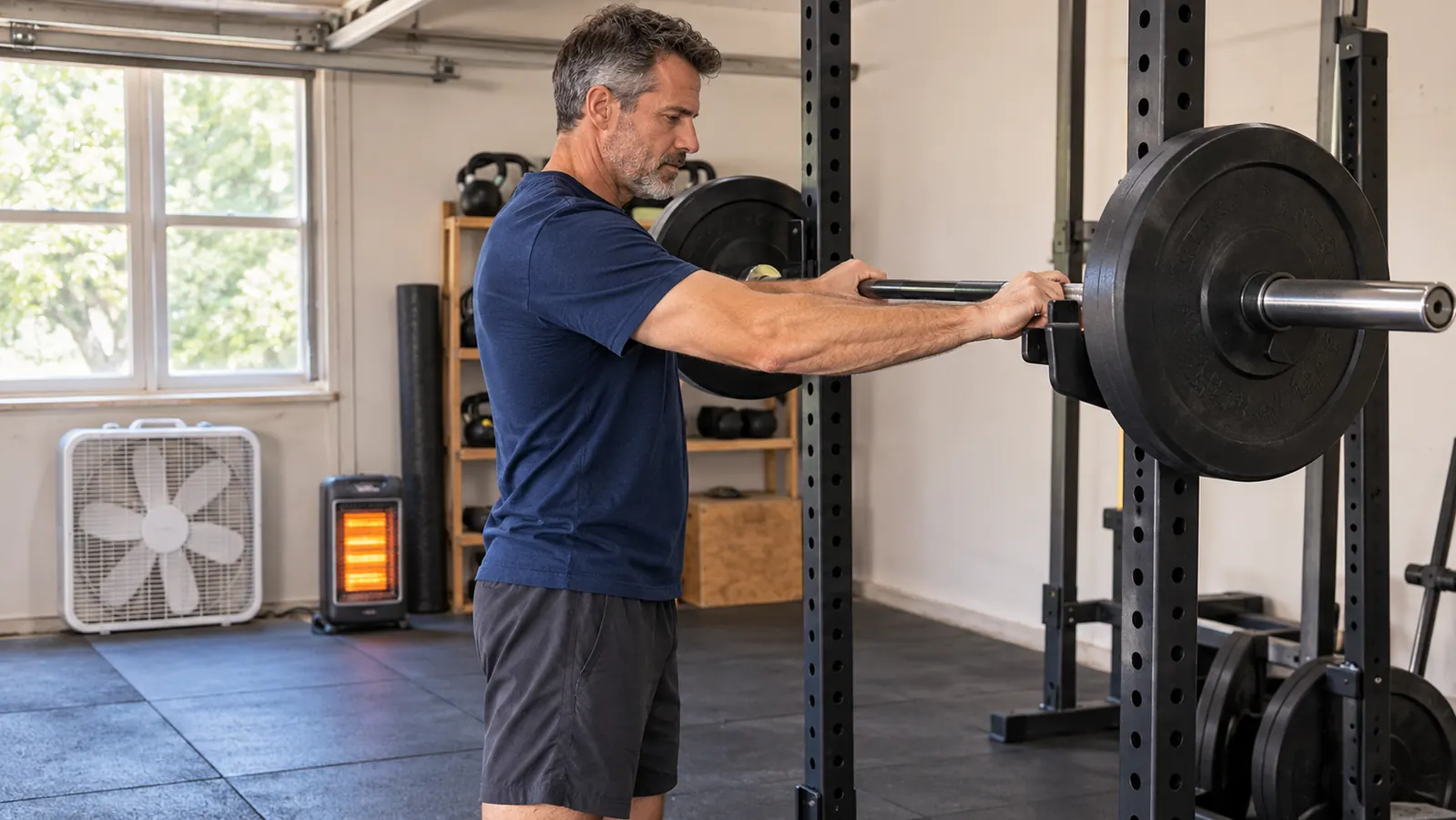
The box shows up at 47 by 12 by 5.5 inches and 28.12 kg, which is manageable for one person with a hand truck and a clear path to the garage. I assembled mine alone on a Saturday afternoon in about two and a half hours, with a socket set, a rubber mallet and a cup of coffee I kept forgetting about. That is a fair afternoon for a rack, not a lost weekend, and I did not need a second set of hands at any point in the process.
The part nobody mentions is that assembly is the easy half. The hard half is deciding where the thing lives, because once it is together it is 46 inches wide and 50 inches deep and it is not going to slide around a garage bay on its own. I set mine on two 3/8 inch rubber rolls side by side, an 8 by 10 foot lifting area, and I lined the rack up so the bar had room to load on both sides without me standing in the walkway to the door.
I did not bolt it down. It sits on the rubber and has not walked, tipped or crept in two years. That said, I made that call for a reason specific to my floor: the concrete is old and I did not want to drill four anchors into a slab I might want to park a truck on again. If the floor is yours to drill and you are not planning to move, anchoring is not going to hurt anything and I would not argue with you about it.
What 11 and 12 Gauge Steel Actually Means
The listing says the tubing is 11 and 12 gauge and that it meets and exceeds ASTM testing standards. I cannot verify a testing standard in a garage in Knoxville and neither can you, so treat that line as a manufacturer claim and nothing more. What I can tell you is what the rack feels like when you rack a bar with some intent behind it, and after two years the answer is that it feels solid and it does not ring.
Here is the honest part. This is a 59.51 pound rack fully assembled. My barbell and my plates together outweigh it, and that is worth understanding before you order. It does not hold itself down with mass the way a heavy commercial rack does. It holds itself with a square footprint, steel that does not flex much and the grip of rubber under the feet. On squats and presses that has been plenty. I have never had a foot lift or a corner come up.
What I have not done is dump a missed rep from lockout onto the catches, and I am not going to tell you how it would take that, because I do not know and I am not going to find out on purpose. If you train alone to failure on squats and expect to bail regularly, that is a different purchase and probably a heavier one. The CAP rack has been a good partner for a careful lifter. It has not been asked to be a spotter.
Eleven inches between the top of the pull-up bar and the drywall, and two years of strict pull-ups without putting a hole in the ceiling.
The Height and Footprint Math
Forty six inches wide, fifty inches deep, eighty five inches high. Those are the numbers that decide whether this rack works in your space, and depth is the one people forget. Fifty inches is over four feet. In my 11 by 20 foot bay it takes the middle of the lifting area and leaves the rowing machine against the wall and the bench pushed back against the shelf when it is not in use.
In a spare bedroom it is a different conversation. Fifty inches of depth plus a seven foot barbell means the rack owns the room, and you will be loading plates with your back against a dresser. I have watched people buy a rack for a 10 by 10 bedroom and then discover the bar does not clear the closet doors. Measure the room, measure the bar path, then measure the ceiling, and do it in that order so you only have to move one thing.
The ceiling is the number I keep coming back to. Eighty five inches assembled leaves eleven inches under my eight foot ceiling, which is enough for strict pull-ups with bent knees and not much else. If your basement has a soffit or a duct running across it, get the tape measure on the lowest point, not the highest, because the lowest point is the one you will hit.
The Bar Catch and the Weight Storage
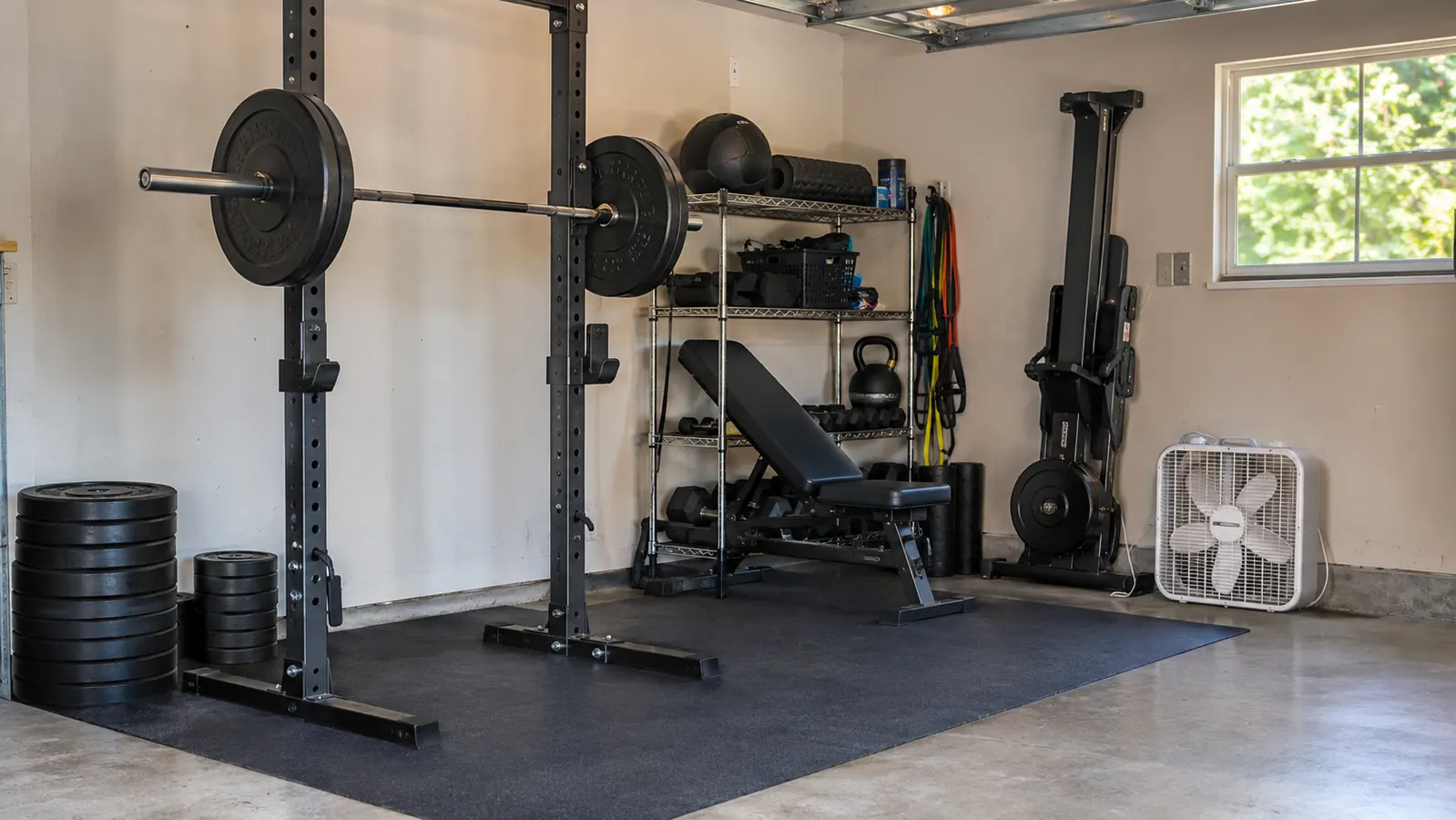
CAP lists a built-in bar and weight storage, and both earn their space in a garage that has to park a truck at night. The weight storage is the part I underestimated. Plates that live on the rack are plates not stacked on the floor against the wall where I trip over them at 5:30 in the morning with one eye open. My iron lives on the rack and comes off when it is needed, and that alone has kept the bay usable.
The catch where the bar sits has been the workhorse. It takes the bar at the height I squat and the height I press, and I have not had to think about it in two years, which is the highest compliment I can pay a piece of gym equipment. It does not have the attachment points of a rack built for a college weight room. If you want band pegs, a landmine or a cable, this is not that rack. It is a bar holder with a pull-up bar, and it is honest about being one.
Noise, Movement and the Floor Underneath
I put rubber down before I put the rack down, for two reasons. Dropped plates were chipping the concrete, and the noise was carrying into the kitchen where my wife was trying to drink coffee in peace. The rack itself adds very little to that noise. It does not rattle, it does not clank when you rack a bar unless you slam it, and the pull-up bar has not developed a squeak. On bare concrete I expect it would be louder, because everything is louder on bare concrete.
Movement is the thing to watch. Mine has not walked in two years, and I credit the rubber more than the rack. On a smooth sealed floor I would check it after every session for the first month and I would think hard about anchoring. A rack that slides an inch a month is a rack that will eventually slide while you are under it, and that is not a risk worth taking to save an afternoon with a drill.
What I Liked
- Assembled at 85 inches high, so it clears an 8 foot ceiling with room for strict pull-ups
- 46 by 50 inch footprint fits a single garage bay without swallowing the floor
- 11 and 12 gauge steel stays tight; two years in, two bolts needed a quarter turn
- Weight storage keeps plates off the floor in a space that has to stay usable
- Went together alone in about two and a half hours with hand tools
Where It Falls Short
- 59.51 pounds assembled is light for a rack, so it relies on footprint and floor grip rather than mass
- 30 day manufacturer warranty is short for a piece of steel you plan to keep for a decade
- No attachment points for band pegs, a landmine or a cable
- 85 inches of height rules out kipping pull-ups under an 8 foot ceiling
- 50 inches of depth is a lot to give up in a small room
Who This Is For
This is for the person with a garage bay, a basement corner or a spare room that has at least 86 inches of clear ceiling and about four and a half feet of depth to give. It is for someone who squats, presses and does pull-ups, who trains alone, and who wants a bar holder that will still be square in five years. It is for the person who would rather buy a simple rack once than a complicated one twice.
It suits a lifter whose training looks like mine, which is get in the garage at 5:30, do the work, and go earn a living. My son uses it too, and I do not worry about him under it, which says something about how stable it feels with a bar on it. That is the whole case for this rack. Not that it is impressive, but that it is dependable in a space that has to stay a garage the rest of the day.
Who Should Skip It
Skip it if you are moving serious weight and train to failure alone. The rack is light, and a light rack asks you to be deliberate about how you bail. Skip it if you want attachments, because there are none worth mentioning. Skip it if you need a warranty that outlasts the break-in period, because thirty days is what CAP gives you and it will be gone before the new wears off the paint.
Skip it if your ceiling is under about 87 inches clear, and skip it if you kip. Skip it if you have a 10 by 10 room and a long barbell, because the depth will find you. And skip it if what you actually want is a rack you can bolt down and load without thinking about it. That rack exists. It is heavier, it costs more, and it is not this one. Buying the wrong rack because the numbers on paper looked similar is how garages end up full of equipment nobody uses.
If the Numbers Fit, This Rack Will Still Be Square in Five Years
46 inches wide, 50 inches deep, 85 inches high, 59.51 pounds assembled, and two years of early mornings behind it without a single thing coming loose that mattered.
Amazon Check Today's Price on Amazon →